

For MM2H holders who earn income internationally — from consulting, digital services, investments, royalties, or business ownership abroad — a Labuan company offers one of the most tax-efficient legal structures available within Malaysia’s legal framework. Labuan is a federal territory of Malaysia with its own distinct legal and tax regime governed by the Labuan Business Activity Tax Act 1990 (LBATA) and the Labuan Financial Services Authority (Labuan FSA). This article explains what a Labuan company is, how it interacts with MM2H status, and whether it is the right structure for your situation in 2026.
What is Labuan IBFC?
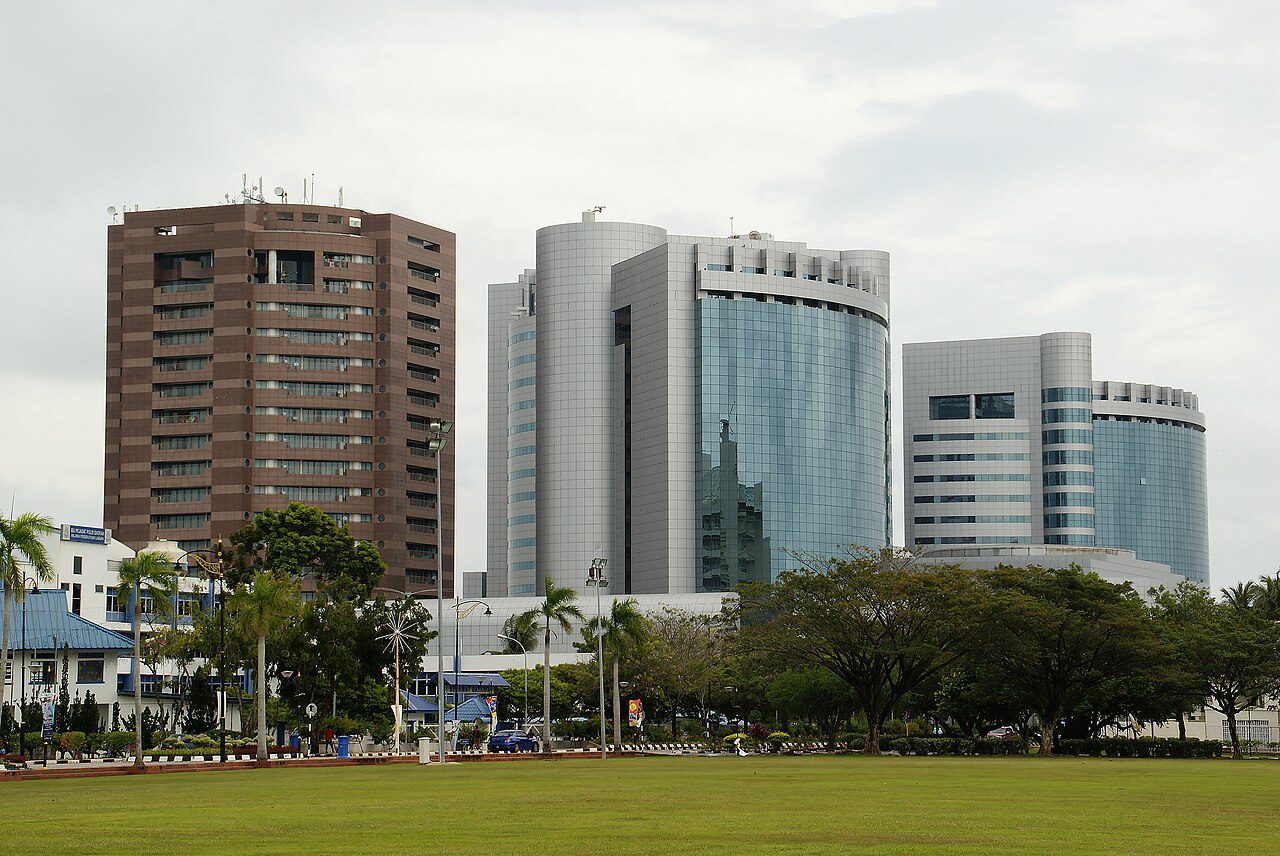
Labuan International Business and Financial Centre (IBFC) is Malaysia’s offshore financial hub, located on Labuan Island off the coast of Sabah. It operates under a distinct legal framework from mainland Malaysia, designed to attract international investors and businesses. Labuan companies can conduct business with non-Malaysian entities and enjoy substantially lower tax rates than their mainland Sdn Bhd counterparts, while still being registered entities under Malaysian law. The Labuan FSA, established under the Labuan Financial Services Authority Act 1996, regulates all financial activities within the IBFC.
Labuan has approximately 6,000 registered entities and manages assets across banking, insurance, trust, fund management and leasing. For MM2H holders, its relevance lies primarily in the ability to structure cross-border income flows and investment returns through a tax-efficient Malaysian legal entity without conflicting with their social visit pass status.
Types of Labuan Companies
Labuan offers several company structures. The two most relevant for MM2H holders are the Labuan Trading Company and the Labuan Non-Trading Company.
Labuan Trading Company conducts “trading activities” as defined by LBATA — this includes buying and selling of goods, management services, administrative services, IT services, and other commercial activities with non-Malaysian persons or entities. Trading companies are taxed at 3% of audited net profits, with a minimum tax of RM20,000 per year. This rate is substantially lower than the 24% mainland corporate tax rate and makes Labuan highly attractive for service-based businesses with international clients.
Labuan Non-Trading Company is used for investment holding — holding shares, real estate, patents, or other assets. Non-trading companies are exempt from Labuan income tax entirely, paying only a flat RM20,000 annual tax. This structure is popular for MM2H holders wishing to hold overseas investments or intellectual property in a Malaysian legal entity for estate planning, succession, and asset protection purposes.
Tax Rates in Labuan
The Labuan tax regime is governed by LBATA and is distinct from Malaysia’s Income Tax Act 1967. The key tax features in 2026 are as follows. For trading companies, tax is 3% of net audited profit or RM20,000 minimum, whichever is higher. For non-trading (investment holding) companies, only the RM20,000 flat payment applies. There is no dividend withholding tax on dividends paid by Labuan companies to their shareholders — this applies whether shareholders are resident or non-resident in Malaysia. No stamp duty applies to instruments of transfer involving Labuan company shares.
However, the Labuan BEPS Action Plan compliance requirements have tightened in recent years following OECD guidance. Substance requirements introduced from 2019 onwards mean that Labuan trading companies must demonstrate genuine economic activity in Labuan — meaning at minimum two full-time employees based in Labuan and an annual expenditure in Labuan of at least RM50,000. Failure to meet substance requirements removes the 3% tax benefit and subjects the company to mainland corporate tax rates.
MM2H and Labuan Company Compatibility
An MM2H holder can legally be a director and shareholder of a Labuan company. The MM2H social visit pass does not prevent passive ownership or non-executive directorship. However, actively managing a Labuan company from mainland Malaysia — signing contracts, attending meetings, performing services — raises the same Employment Pass considerations that apply to Sdn Bhd companies. The MM2H holder must ensure their activities do not cross into active employment within Malaysia without a corresponding Employment Pass.
One important planning point: while the Labuan company itself benefits from the preferential Labuan tax rate, dividends or income received by the MM2H holder personally may be subject to Malaysian personal income tax if the holder is a Malaysian tax resident (having spent 182 days or more in Malaysia in a calendar year). Malaysia’s 2024 shift in foreign-sourced income (FSI) tax policy means that certain FSI remitted to Malaysia is now taxable for resident individuals. A qualified Malaysian tax advisor should be consulted to structure the income flow correctly before committing to a Labuan structure.
Setting Up a Labuan Company
Setting up a Labuan company requires engagement with a Labuan Trust Company (LTC), which is a licensed intermediary authorised by the Labuan FSA to incorporate and administer Labuan entities. You cannot register a Labuan company directly with a government portal — a licensed LTC is mandatory. The process typically takes three to seven business days.
Required documents include certified copies of the directors’ and shareholders’ passports, proof of residential address, a business plan or description of intended activities, the MM2H pass copy for any MM2H holder directors, and a compliance form covering anti-money laundering declarations. The LTC will also conduct KYC due diligence.
Annual costs for maintaining a Labuan company include the LTC annual fee (typically RM3,000–RM8,000 depending on the services included), the Labuan FSA annual renewal fee (USD 100), the LBATA annual tax payment (RM20,000 minimum), and the cost of the annual audit required for trading companies. Total annual overhead is typically RM30,000–RM50,000, making Labuan structures most cost-effective for businesses generating more than RM500,000 per year in income.
Banking for Labuan Companies
Labuan companies can bank with Labuan-licensed banks — several international banks have Labuan branches including Citibank, HSBC, Standard Chartered and Maybank. Banking in Labuan provides multi-currency accounts and offshore banking capabilities that mainland Malaysian bank accounts do not offer. For MM2H holders managing global income streams, a Labuan corporate bank account provides clean separation between the Labuan entity’s income and personal Malaysian banking.
Opening a Labuan bank account requires the standard corporate documents, a detailed source-of-funds declaration, and in-person or video KYC depending on the bank. Minimum deposits range from USD 10,000 to USD 50,000 depending on the institution. Monthly maintenance is typically fee-free for accounts above the minimum balance threshold.
Substance Requirements
Post-BEPS compliance in Labuan requires trading companies to meet genuine substance requirements. This means at minimum two full-time employees ordinarily resident in Labuan and minimum annual operating expenditure of RM50,000 in Labuan. For MM2H holders based on the peninsula, this means hiring actual Labuan-based staff — either through the LTC’s managed employee services or by recruiting independently. The Labuan FSA conducts annual substance reviews, and companies that fail the test are re-assessed under mainland tax rates for that year.
Non-trading (holding) companies have minimal substance requirements — they must be managed and controlled from Labuan, meaning board meetings should be held in Labuan and resolutions should be signed there. Many LTCs offer a “registered office plus meeting room” service to satisfy this requirement economically.
When Is a Labuan Company Right for You?
A Labuan company makes sense for MM2H holders who earn significant income from international clients or cross-border services, hold diversified investment portfolios they wish to manage through a structured entity, have succession planning or estate planning goals that benefit from a Malaysian-registered holding vehicle, or operate consulting businesses serving non-Malaysian counterparties. It is generally not suitable for holders whose income is primarily from Malaysian sources (which would be taxed under mainland rules regardless), those earning below RM500,000 annually (where the RM20,000+ annual overhead makes it uneconomic), or those who want to run a local consumer-facing business in Malaysia (which would require an Sdn Bhd).
Many sophisticated MM2H holders use both structures in tandem — a Labuan holding company for overseas investments and an Sdn Bhd for any Malaysian business activities. This dual structure, properly advised by a licensed Malaysian tax and corporate lawyer, can optimise both the corporate tax position and personal income tax position while maintaining full MM2H compliance.
Before structuring income through a Labuan company, confirm how it interacts with your residency on the official Malaysia MM2H programme portal.
Frequently Asked Questions
Does MM2H lead to permanent residency or citizenship?
No. It is a long-stay visa, renewable by tier, and does not convert to permanent residency or a Malaysian passport. Citizenship requires a separate pathway.
Can MM2H applicants work in Malaysia on MM2H?
Not in the ordinary sense. The base visa does not grant work rights; employment requires a separate work permit. However, higher tiers carry limited allowances — verify the current rules for your tier with MOTAC or a licensed MM2H agent.
Can the whole family come?
Yes. Spouses and dependent children can be included, and parents can be added in some circumstances, though the specific conditions depend on the tier and the operator.
Is the property purchase really mandatory?
Yes, in all tiers of the 2024 programme. The minimum purchase value depends on your tier. The property must be held for ten years from the visa endorsement date.
How long does approval take?
Typically three to six months from submission of a complete application, though timelines vary with agent workload and document completeness.
Related Articles
If you found this article useful, you may also want to read:
- How to Register a Company in Malaysia as an MM2H Holder
- Can You Work or Run a Business on MM2H?
- MM2H and Crypto, Dividends and Passive Income Tax 2026
- MM2H Pension and Investment Income Tax 2026
- MM2H and Foreign-Sourced Income: Remittance Rules
References
- Labuan Financial Services Authority (Labuan FSA): https://www.labuanfsa.gov.my
- Labuan IBFC Official Portal: https://www.labuanibfc.com
- Labuan Business Activity Tax Act 1990 (LBATA): https://www.labuanfsa.gov.my/legislation
- Inland Revenue Board of Malaysia (LHDN) — Tax Residency Rules: https://www.hasil.gov.my
- Ministry of Tourism, Arts and Culture (MOTAC) — MM2H Programme 2026: https://www.motac.gov.my
- OECD BEPS Action Plan — Substance Requirements: https://www.oecd.org/tax/beps/
Important Notice
MM2H requirements and immigration policies may change.
Always verify the latest information with relevant Malaysian government authorities or authorised programme operators before making any financial or relocation decisions.